
How We Ensure Long Life Water Pumps
When customers buy a water pump, they expect one simple thing — long-lasting performance.
Nobody wants a pump that starts creating problems after a few months. People want a pump that runs smoothly, saves electricity, delivers consistent water flow, and continues working for years.
This is exactly why building long life water pumps requires more than simply assembling components together.
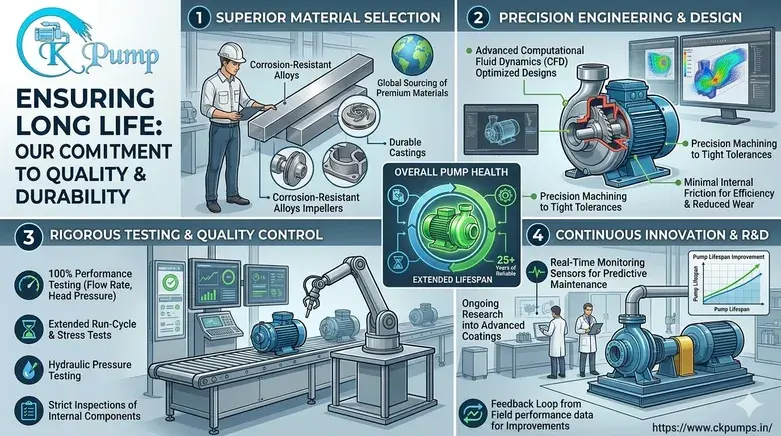
Long pump life depends on manufacturing quality, material selection, testing processes, engineering standards, and customer support.
At CK Pumps, the focus is not only on manufacturing pumps but on ensuring every pump delivers reliable performance for a long time.
In this guide, we will explain how we ensure long life water pumps and what factors actually increase pump lifespan.
Why Long Life Water Pumps Matter
A water pump is not something customers replace every year.
Whether used in homes, agriculture, commercial buildings, or industries, customers expect reliability.
A pump with a short lifespan creates multiple problems.
Frequent repairs increase costs. Downtime interrupts daily work. Electricity consumption increases when efficiency drops.
This is why durability becomes one of the most important factors when selecting a pump.
Long-lasting pumps reduce maintenance costs and improve overall performance.
Quality Starts with Material Selection
The foundation of every durable pump begins with materials.
If poor materials are used during manufacturing, the pump may initially work but gradually lose efficiency and reliability.
Strong materials improve durability because they resist wear, corrosion, vibration, and daily operational stress.
Material selection affects almost every part of the pump including motor housing, shaft components, impellers, and internal assemblies.
Using better materials increases both performance and lifespan.
Proper Engineering Creates Better Performance
A pump is more than simply combining parts together.
Every component must work together efficiently.
Pump design affects:
- Water flow
- Pressure generation
- Energy consumption
Proper engineering reduces internal losses and minimizes unnecessary stress on the motor.
Better engineering results in smoother operation and improved reliability.
Why Motor Design Matters
The motor is responsible for driving the entire system.
If motor quality is poor, overall pump life becomes shorter.
A properly designed motor operates efficiently while generating less heat.
Lower operating temperatures improve component life and reduce internal stress.
Motor performance directly affects reliability, energy consumption, and maintenance requirements.
This is why motor quality remains one of the most important factors in long life water pumps.
Testing Makes a Big Difference
Many customers focus only on specifications.
However, testing procedures are equally important.
Every pump should be tested before delivery to verify performance and identify defects.
Testing allows manufacturers to evaluate:
Water flow, pressure output, electrical operation, leakage protection, vibration levels, and overall reliability.
Proper testing helps eliminate manufacturing defects before the pump reaches customers.
This process significantly improves long-term performance.
Efficient Design Reduces Wear
Efficiency is not only about saving electricity.
Efficient pumps experience less stress during operation.
Lower stress means lower heat generation and reduced wear on internal components.
This improves lifespan because the pump operates closer to ideal conditions.
An efficient pump generally performs better throughout its service life.
Why Component Quality Matters
A pump contains many components working together continuously.
If even one important component is weak, overall reliability decreases.
Bearings, seals, shafts, impellers, electrical components, and motor parts all influence lifespan.
Low-quality components may reduce manufacturing costs but increase repair costs later.
Using better components creates better long-term reliability.
Manufacturing Consistency Is Important
Building one good pump is easy.
Building thousands of reliable pumps consistently requires proper manufacturing processes.
Consistency ensures every product maintains the same quality standards.
This requires controlled production methods, quality checks, and strict testing procedures.
Consistency helps customers receive reliable performance every time.
How Heat Affects Pump Life
Heat is one of the biggest enemies of pump performance.
Excessive operating temperatures damage motor components and reduce efficiency.
When heat increases continuously, internal parts wear faster.
Reducing heat generation improves reliability.
This is why proper motor design, efficient engineering, and quality materials all work together to improve pump life.
Why Installation Also Matters
Even a high-quality pump can fail if installation is poor.
Improper installation creates additional stress.
Wrong pipe sizes, poor electrical connections, and incorrect alignment reduce performance.
Correct installation improves water flow and reduces mechanical stress.
This helps pumps operate efficiently for longer periods.
Regular Maintenance Improves Lifespan
Long life water pumps still require maintenance.
Regular inspections help identify small issues before they become large problems.
Cleaning, checking connections, monitoring performance, and inspecting for unusual noise help maintain reliability.
Maintenance does not need to be complicated.
Small checks performed regularly improve long-term performance significantly.
Why Customers Should Choose Reliable Manufacturing
Many customers compare pumps based only on price.
However, long-term value matters more.
A slightly better pump often provides years of additional service.
This reduces repair costs, replacement costs, and operational interruptions.
Reliable manufacturing focuses on total ownership value rather than short-term pricing.
Role of a Water Pump Supplier
A reliable Water Pump Supplier helps customers choose the correct pump according to their requirements.
Different applications require different pump designs.
Domestic applications, agriculture, industries, and commercial buildings all have different needs.
Proper guidance ensures customers receive pumps designed for their operating conditions.
This improves performance and lifespan.
Why Long Life Pumps Save Money
Some customers focus only on purchase price.
However, a durable pump reduces expenses throughout its lifetime.
Lower maintenance requirements, reduced breakdowns, lower electricity consumption, and longer service intervals all contribute to savings.
Long life pumps are often more economical even if the initial investment is slightly higher.
How CK Pumps Focuses on Long-Term Reliability
At CK Pumps, reliability begins during design and continues through manufacturing.
Every stage focuses on improving performance and durability.
From material selection to testing procedures, every process is designed to improve consistency and reliability.
The goal is simple.
Deliver pumps that continue performing efficiently for years.
Because customers do not simply buy pumps.
They invest in dependable water solutions.
Conclusion
Understanding how we ensure long life water pumps helps explain why manufacturing quality matters.
Long lifespan does not happen accidentally.
It depends on quality materials, engineering standards, testing procedures, efficient design, reliable components, and proper customer guidance.
When all these factors work together, pumps perform better and last longer.
Choosing a reliable manufacturer and trusted Water Pump Supplier helps customers receive products designed for efficiency, durability, and long-term value.
A long life water pump is not only about surviving longer.
It is about delivering reliable performance every day for years.