
Low Pressure Issue in Water Pumps: Causes, Solutions & How to Fix It
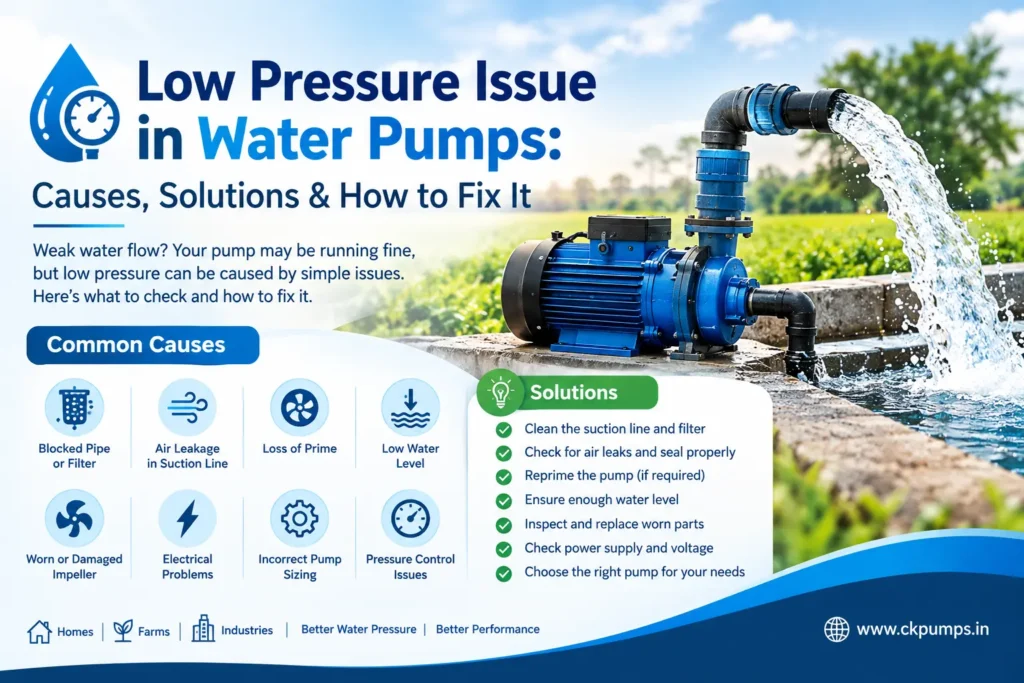
A water pump should give a steady flow of water when you need it. But sometimes, the pump runs normally while the water flow becomes weak, slow, or uneven. This is commonly called a low pressure issue in a water pump.
Low water pressure can happen in self-priming pumps, submersible pumps, openwell submersible pumps, and other water pumping systems. The problem is not always a damaged pump. A blocked pipe, air leakage, low voltage, wrong pump size, worn impeller, or low water level can also reduce pump performance.
For homes, shops, farms, apartments, and industrial applications, finding the real reason is important before replacing the pump.
If you are looking for a reliable water pump in Ahmedabad, choosing the correct pump capacity, head, flow rate, and application is the first step toward getting better water pressure.
What Does Low Pressure in a Water Pump Mean?
Low pressure means the pump is not producing the expected water force or flow at the delivery point.
For example, you may notice that the water comes out slowly from a tap, the overhead tank takes too long to fill, or water pressure becomes weak when more than one tap is opened.
Sometimes the pump runs continuously but does not build enough pressure. In other cases, the pressure may start normally and then become weak after a few minutes.
The important thing is to understand that water pressure and water flow are connected but are not exactly the same thing. A restriction in the pipe can reduce flow even when the pump itself is working correctly.
Common Symptoms of a Low Pressure Water Pump
A low-pressure water pump problem can show itself in several simple ways.
You may notice weak water flow from taps, slow tank filling, uneven water supply, or reduced discharge from the pump.
The pump may also run for a long time without reaching the required delivery point. In some systems, the motor starts and stops too frequently.
If the water pressure has gradually reduced over time, dirt, wear, pipe blockage, or an ageing pump component may be responsible.
If the pressure suddenly becomes low, check for problems such as a leak, power supply issue, loss of prime, or a change in the water source.
Main Causes of Low Pressure in Water Pumps
1. Blocked Suction Pipe or Filter
A water pump needs a clear path to receive water.
If the suction pipe, inlet screen, filter, or foot valve becomes blocked with mud, sand, rust, or other debris, the pump cannot receive enough water.
This can make the pump sound normal while the actual water output becomes weak.
Cleaning the suction line and checking the inlet components can sometimes solve the problem without replacing the complete pump.
2. Air Leakage in the Suction Line
Air entering the suction line is another common reason for poor pump performance.
A loose connection, damaged pipe, faulty joint, or poor sealing can allow air to enter the suction system. The pump may then struggle to lift water properly.
This is especially important for self-priming and suction-based pumping systems.
If the pump repeatedly loses prime or produces irregular water flow, the suction line and all connections should be inspected carefully.
3. Pump Has Lost Its Prime
Many suction-type pumps need proper priming before they can lift water correctly.
If air enters the pump casing or the pump remains unused for a long time, it may lose prime. When this happens, the motor can run but the pump may not deliver the expected water.
A pump should be primed according to the manufacturer’s instructions before operation.
Running a pump incorrectly without sufficient water can also lead to overheating or damage.
4. Low Water Level
The water source itself can cause a pressure problem.
If the water level in a tank, well, or openwell becomes too low, the pump may not receive enough water. This can reduce discharge and make the pump appear weak.
Before replacing the pump, always check whether sufficient water is available at the suction or pump intake.
For submersible and openwell applications, correct pump installation and suitable water depth are particularly important.
5. Worn or Damaged Impeller
The impeller is one of the most important working parts inside many centrifugal water pumps.
It helps transfer energy from the motor to the water. If the impeller becomes worn, damaged, blocked, or affected by excessive sediment, the pump may lose its ability to produce the required flow and pressure.
A gradual reduction in pump performance can be a sign of component wear.
If cleaning the external system does not solve the problem, the internal pump components should be inspected by a qualified technician.
6. Incorrect Pump Size
Sometimes there is nothing wrong with the pump. The problem is that the selected pump is not suitable for the application.
Every water pumping system has different requirements.
The required pump depends on factors such as:
- Required water flow
- Total head
- Delivery distance
- Pipe size
- Number of outlets
- Water source
- Installation height
- Application type
For example, a pump designed for a small domestic requirement may not provide the required performance for a larger building or industrial application.
Choosing a pump only by HP is therefore not always enough. The complete application should be considered.
7. Low Voltage or Electrical Problems
A water pump motor needs the correct electrical supply to operate properly.
Low voltage, loose electrical connections, incorrect wiring, or other electrical problems can affect motor performance.
If the motor sounds weak, overheats, trips frequently, or does not reach normal operating performance, the electrical supply should be checked by a qualified electrician or technician.
Do not try to open electrical components while the pump is connected to power.
8. Leakage in the Delivery Pipe
A pump may be producing pressure, but water can be lost before it reaches the tap or tank.
A leaking delivery pipe, damaged joint, open valve, or faulty connection can reduce the pressure available at the final outlet.
Look for visible water leakage around pipe joints and fittings.
Underground leaks can be harder to identify and may require professional inspection.
9. Pipe Size or Excessive Pipe Restriction
A narrow or partially blocked delivery pipe can restrict water movement.
Long pipe runs, too many bends, unsuitable pipe sizing, clogged filters, and partially closed valves can all increase resistance in the system.
The result can be lower water flow at the final outlet even when the pump itself is working.
Correct pipe sizing should therefore be considered when installing a new water pump.
10. Pump Wear Due to Long-Term Use
Like other mechanical equipment, water pumps can lose performance over time.
Bearings, seals, impellers, electrical components, and other internal parts can experience wear.
If the pump previously provided good water pressure but its performance has slowly reduced despite proper installation and maintenance, professional inspection may be required.
How to Check a Water Pump With Low Pressure
Before buying a new pump, follow a simple checking process.
First, check whether the problem affects the complete water system or only one tap. If only one outlet has weak flow, the issue may be related to that outlet, tap, filter, or local pipe.
If all outlets have low flow, inspect the pump, suction line, delivery line, water source, and electrical supply.
Next, check whether the pump is receiving enough water. Look at the water level and inspect the suction or inlet side for blockage.
Then check for visible pipe leakage and loose connections.
For self-priming pumps, check whether the pump has proper prime.
If the external system appears normal, the pump’s impeller, motor, seals, and other internal components may need professional inspection.
This step-by-step approach helps prevent unnecessary pump replacement. Troubleshooting guides commonly recommend checking the system around the pump before assuming that the pump itself has failed.
Low Pressure in Self Priming Water Pumps
Self-priming pumps are commonly used where water needs to be lifted from a tank, underground source, or other water supply.
Low pressure in a self-priming pump can be caused by air entering the suction pipe, poor priming, blocked suction lines, low water level, damaged valves, or incorrect installation.
The suction pipe should have proper connections and should be suitable for the required application.
If the pump repeatedly loses prime, simply adding more motor power may not solve the problem. The suction system should be checked first.
Low Pressure in Submersible Water Pumps
Submersible pumps operate inside the water source, so their troubleshooting requirements are different from surface pumps.
Low pressure may occur because of a low water level, blocked intake, worn internal components, incorrect pump selection, damaged delivery piping, or electrical problems.
The pump should be selected according to the required head and flow rather than HP alone.
If the pump is installed in a borewell or deep water source, professional inspection is recommended when performance changes suddenly.
Low Pressure in Openwell Submersible Pumps
Openwell submersible pumps are designed for applications where the pump operates in an open water source such as a well or collection area.
If water pressure becomes low, first check the water level and pump intake.
Mud, debris, sand, or other material can affect the inlet and reduce water flow.
The delivery pipe should also be checked for leakage or blockage.
Selecting the correct openwell pump according to the required water lifting height and flow is important for stable performance.
How to Prevent Water Pump Pressure Problems
Regular maintenance can reduce many common pump problems.
Keep the pump and surrounding area clean. Check pipes and connections for leakage. Make sure filters and inlet screens are not blocked. Monitor unusual sounds, overheating, vibration, or sudden changes in water flow.
Avoid running a pump without enough water.
Most importantly, select a pump according to the actual application. The right combination of pump type, motor capacity, head, flow, pipe size, and water source can make a major difference in performance.
When Should You Replace a Water Pump?
Not every low-pressure problem requires a new pump.
A blocked filter, leaking pipe, air leak, or incorrect installation may be repaired without replacing the pump.
However, replacement may become practical when the pump has severe internal wear, repeated failures, damaged major components, or is simply not suitable for the required application.
If the existing pump is too small for the required head and flow, repairing it will not change its basic capacity. In such a situation, selecting a correctly sized replacement pump is the better technical solution.
How to Choose the Right Water Pump for Better Pressure
If you are buying a new water pump, do not select one only because it has a higher HP rating.
Start by understanding how much water you need and how high or how far the water must be delivered.
Then consider the water source, pipe length, pipe diameter, number of outlets, installation conditions, and required flow.
For residential and commercial applications, a correctly selected self-priming water pump, submersible pump, or openwell submersible pump can provide the required water delivery when properly installed.
A good pump selection also helps avoid unnecessary electricity use and repeated service problems.
Buy the Right Water Pump in Ahmedabad
If you are facing a low pressure issue in a water pump and need a replacement, choosing the right manufacturer and pump type is important.
CK Pump provides water pump solutions for different water lifting requirements in Ahmedabad. Buyers can choose the suitable pump according to their application, required capacity, water source, and installation conditions.
Whether you need a self-priming water pump, submersible water pump, or openwell submersible pump, discuss your actual requirement before selecting the model.
For the right pump recommendation, share details such as the water source, required water flow, lifting height, pipe distance, and application. This makes it easier to select a pump that matches the real requirement instead of simply choosing a higher HP motor.
Final Thoughts
A low pressure issue in a water pump does not always mean that the pump has failed.
The real cause may be a blocked pipe, air leakage, low water level, loss of prime, worn impeller, electrical problem, leakage, or incorrect pump selection.
The best solution is to identify the cause first and then repair or replace the correct component.
For a new installation, selecting the right water pump capacity, head, flow, pump type, and pipe arrangement is the foundation of reliable water delivery.
If you are searching for a water pump manufacturer or supplier in Ahmedabad, CK Pump can help you identify a suitable pump according to your actual water lifting requirement.