
Water Pump Making Noise: Causes and Solutions
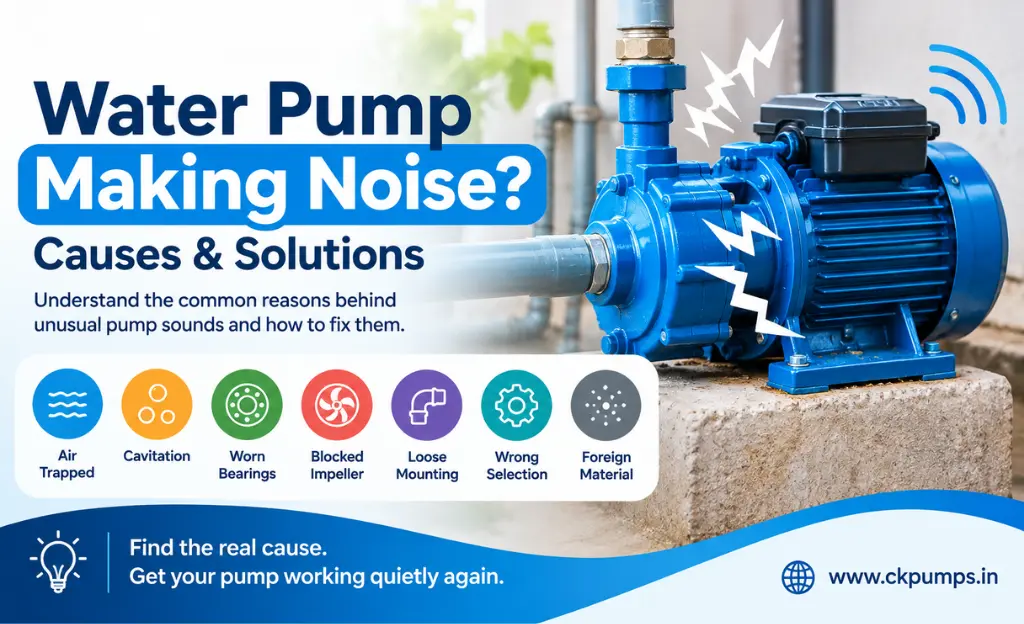
A water pump should not sound like a machine fighting for its life. A normal pump may produce some operating sound, but a sudden grinding, rattling, humming, squealing, or knocking noise deserves attention.
If your water pump is making noise, the sound itself can provide useful clues. Air trapped in the system, cavitation, worn bearings, a blocked impeller, poor installation, loose components, and vibration can all create unusual pump noise.
The good news is that many noise problems have a clear cause and a practical solution. The important part is to diagnose the problem instead of simply ignoring the sound and hoping the pump becomes quiet on its own.
Why Is My Water Pump Making Noise?
A noisy water pump does not always mean the motor has failed. The problem can come from the hydraulic side, mechanical components, pipework, or installation.
Grundfos identifies trapped air, low inlet pressure, bearing wear, blockage, incorrect pump sizing, and mechanical problems among possible causes of pump noise.
The first step is therefore simple: listen to the type of noise and check when it happens.
Common Types of Water Pump Noise
Different sounds can point toward different problems.
Humming or Buzzing
A low humming sound can come from the motor or vibration transferred through the pump and connected pipework.
If the pump hums but does not operate normally, the electrical supply and motor condition should be checked by a qualified professional.
A pump that is securely mounted can also be quieter because less vibration travels into the floor, wall, or pipe system.
Rattling or Gravel Like Noise
A rattling sound that resembles gravel moving inside the pump can indicate cavitation.
Cavitation happens when pressure at the pump inlet becomes too low. Vapour bubbles form and then collapse inside the pump. This can create loud noise and vibration and may damage the impeller and pump housing over time.
This is one noise you should not casually ignore.
Grinding or Screeching
Grinding or harsh rattling can indicate worn bearings or other mechanical problems.
Xylem troubleshooting information lists worn bearings, damaged rotating parts, bent shafts, cavitation, and resonance among causes of excessive pump noise.
If the noise increases as the pump operates, stop guessing and have the pump inspected.
Gurgling or Sputtering
Gurgling often points toward air inside the pump or pipework.
Air can enter through suction side problems, insufficient water supply, poor priming, or installation issues. Grundfos also recommends checking and venting systems where trapped air causes pump noise.
1. Air Trapped Inside the Pump or Pipes
Air is one of the first things to check when a water pump suddenly becomes noisy.
If air enters the pump or suction pipe, the pump may produce gurgling, rattling, or irregular sounds. Water flow can also become inconsistent.
For pumps that require priming, make sure the pump and suction line have been properly filled according to the manufacturer’s instructions.
Also inspect suction connections for possible air entry. A loose connection may allow air into the system even when you do not see an obvious water leak.
Solution
Check the priming condition, water level, suction connections, and pipework. Vent trapped air according to the pump’s installation instructions.
If the pump continues to make unusual noise after proper filling and venting, professional inspection may be necessary.
2. Cavitation Due to Low Inlet Pressure
Cavitation is another important cause of unusual pump noise.
When the pressure at the pump inlet becomes too low, vapour bubbles can form and collapse. This produces noise and vibration and can cause pitting damage to internal components.
Several conditions can contribute to poor inlet conditions. These include inadequate water level, excessive suction lift, restricted suction flow, or unsuitable system conditions.
Solution
Check the suction side of the system and make sure the pump receives adequate water at its inlet.
The pump should operate within the conditions specified by its manufacturer. If you suspect cavitation, do not keep running the pump for long periods while waiting for the noise to disappear.
3. Worn or Damaged Bearings
Bearings support rotating components inside the pump and motor assembly. When they wear, the pump can develop grinding, rattling, or other mechanical sounds.
Grundfos specifically identifies excessive bearing wear as a cause of rattling noise, while Xylem also lists defective bearings as a cause of noisy pump operation.
Solution
A trained technician should inspect the bearings and related rotating components.
Depending on the pump design, the bearing may be replaceable or the complete assembly may require service or replacement. Do not assume that adding a quick fix will solve a worn bearing.
4. Blocked or Damaged Impeller
The impeller plays a central role in moving water through many centrifugal pump designs.
Debris or foreign material can interfere with the impeller. A damaged or unbalanced impeller can also create vibration and noise.
Grundfos troubleshooting guidance recommends cleaning the impeller when blockage or clogged blades cause uneven operation.
Solution
Switch off and isolate the electrical supply before inspection. Then follow the manufacturer’s instructions for accessing and cleaning the pump.
If the impeller is damaged, replace the affected component rather than continuing to operate the pump in that condition.
5. Loose Mounting or Pipework
Sometimes the pump itself is not the main problem. The installation can amplify normal operating vibration.
A loose mounting bolt, unsupported pipe, or stressed pipe connection can transmit vibration through the building.
Grundfos recommends stable mounting, vibration reduction, flexible connections where appropriate, and proper pipe support to reduce noise transmission.
Solution
Check that the pump sits securely on a suitable base. Inspect mounting hardware and make sure connected pipes do not place unnecessary mechanical stress on the pump.
Also check nearby brackets, covers, and fittings. Sometimes one loose component creates an impressive amount of noise.
6. Incorrect Pump Selection or Operating Conditions
Pump selection matters.
An unsuitable pump can operate outside the conditions required by the system. Grundfos notes that both oversized and undersized pumps can contribute to noise in certain systems.
The pump should match the required flow, head, water source, and installation conditions.
Solution
Check the pump’s technical specifications against the actual application.
If the system has changed since installation, such as changes to pipework, water demand, or operating conditions, the original pump selection may no longer be appropriate.
A qualified pump professional can check the operating point and recommend the correct solution.
7. Foreign Material Inside the Pump
Sand, dirt, scale, or other foreign material can enter a pump system and interfere with moving components.
This may produce rattling or abnormal vibration. Grundfos lists foreign bodies inside the pump as one possible cause of excessive noise.
Solution
Turn off the pump safely before inspection. Clean the pump according to the manufacturer’s instructions and check the impeller and other accessible components.
If debris keeps returning, investigate where it comes from instead of repeatedly cleaning the pump.
How to Fix a Noisy Water Pump Safely
Before trying to repair the pump, switch off the electrical supply and prevent accidental restarting.
Then check the basic conditions first.
Check whether the pump has enough water.
Check whether the pump requires priming.
Inspect the suction side for air entry.
Check for visible leaks.
Look for loose mounting hardware.
Check for obvious blockage around the intake or pump.
Listen carefully to determine whether the noise sounds hydraulic or mechanical.
For electrical or internal mechanical problems, contact a qualified technician. Pump manuals also stress disconnecting the power supply before opening or dismantling equipment.
When Should You Stop Using a Noisy Water Pump?
Do not continue operating a pump simply because it still delivers water.
Stop and investigate the problem if the noise is suddenly much louder than normal, the pump vibrates heavily, water flow drops, the motor overheats, the pump repeatedly trips, or you notice leakage.
Cavitation and mechanical faults can become more serious when the pump continues operating under unsuitable conditions.
A small noise today can become a much larger repair tomorrow.
How to Prevent Water Pump Noise
Good installation and regular inspection can reduce many common noise problems.
Keep the pump properly mounted and make sure connected pipework has suitable support. Maintain adequate water supply and avoid operating the pump outside its specified conditions.
Keep the pump and suction path free from unnecessary blockage. Follow the manufacturer’s maintenance and installation instructions instead of relying on guesswork.
Most importantly, do not treat unusual noise as normal simply because the pump is still working.
Final Thoughts
A water pump making noise can have several causes, from trapped air and cavitation to worn bearings, impeller problems, loose mounting, and unsuitable operating conditions.
The sound gives you a useful starting point, but it does not provide a complete diagnosis by itself.
Start with simple checks such as water supply, priming, suction conditions, mounting, and visible blockage. If the noise points toward bearings, electrical faults, shaft problems, or internal damage, get the pump inspected by a qualified professional.
For homeowners, farmers, businesses, and other users, choosing the right pump and installing it correctly can make a big difference to reliable operation.
A pump does not need to be completely silent. But if it suddenly starts sounding like it has something important to complain about, it is probably worth listening.