
Best Pumps for Homes, Apartments & Bungalows: A Practical Buying Guide
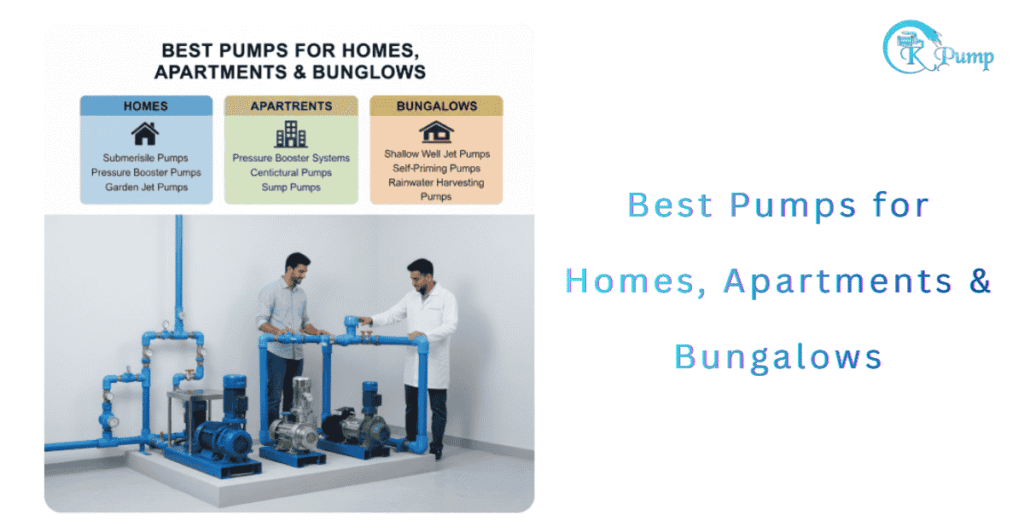
Choosing a water pump for a home is rarely a one-size-fits-all decision. A small apartment, a multi-storey building, and an independent bungalow all demand different water pressure, flow, and reliability levels. Yet many pump failures happen simply because the wrong type of pump was selected in the first place.
This guide explains the best pumps for homes, apartments & bungalows, how they differ, and what technical factors actually matter—without overcomplicating things.
Why Residential Water Pump Selection Matters
In residential use, a pump doesn’t run for a few minutes—it runs daily, sometimes for years. If the pump is underpowered, you’ll face low pressure. If it’s oversized, electricity bills go up and motor life goes down.
A reliable water pump supplier focuses not just on selling a pump, but on matching the pump to real usage conditions—building height, water source, and daily demand.
Key Factors Before Choosing Any Home Water Pump
Before jumping into pump types, it’s important to understand three core parameters.
1. Head, Flow Rate, and Power in Water Pumps
These three decide whether a pump will work comfortably or struggle every day.
Head: The vertical height the pump can push water (crucial for apartments)
Flow rate: How much water is delivered per minute
Power: Electrical energy required to deliver that performance
For example, a high-flow pump with low head may work in a bungalow but fail in a 5-floor apartment.
2. Source of Water
Underground sump
Overhead tank
Borewell
Municipal supply line
Each source demands a different pump design and motor load.
3. Daily Usage Pattern
Number of bathrooms
Simultaneous water use
Storage vs direct pressure systems
Understanding usage helps you choose the right water pump instead of guessing.
Best Pumps for Individual Homes & Bungalows
Self-Priming Monoblock Pumps
For independent houses and bungalows with underground tanks, self-priming pumps are the most common choice.
Why they work well:
Easy installation
Handles air locks better
Suitable for moderate head requirements
Cost-effective for daily household use
They perform best when suction lift is reasonable and piping is properly sized.
Best Pumps for Apartments & Multi-Storey Buildings
Centrifugal or Multistage Pumps
Apartments require consistent pressure across multiple floors.
Key advantages:
Higher head capacity
Stable flow for multiple users
Better pressure distribution
Multistage pumps are especially effective when water needs to reach higher floors without pressure drop.
Pressure Booster Systems (Where Needed)
In apartments using direct supply systems, booster pumps maintain uniform pressure at all outlets.
This reduces:
Fluctuating water flow
Pressure loss during peak usage
User complaints across floors
Best Pumps for Borewell-Based Homes
Submersible Pumps
For homes or apartments relying on borewells, submersible pumps are essential.
Why they’re preferred:
Operate underwater (no suction loss)
Efficient for deeper water levels
Lower noise levels
Here, winding quality plays a major role. Poor winding leads to overheating and early failure, especially in fluctuating voltage conditions.
Why Winding Quality Matters in Residential Pumps
The motor winding directly affects:
Heat tolerance
Power efficiency
Long-term reliability
High-quality copper windings:
Handle load variations better
Reduce power loss
Extend motor life
Many common water pump problems, such as frequent tripping or overheating, start with compromised winding quality—not the pump design itself.
Common Water Pump Problems in Homes (And How to Avoid Them)
| Problem | Likely Cause |
|---|---|
| Low water pressure | Incorrect head selection |
| High electricity bill | Oversized pump |
| Motor overheating | Poor winding or ventilation |
| Noise & vibration | Improper installation |
| Frequent breakdowns | Skipped maintenance |
Most of these issues are preventable with correct selection and basic water pump maintenance.
Water Pump Maintenance Tips for Long Life
Even the best pump needs periodic care.
Clean suction filters regularly
Check electrical connections
Ensure proper earthing
Avoid dry running
Monitor unusual noise or heating
Simple maintenance can add years to a pump’s service life and prevent sudden failures.
Matching Pump Type to Home Type (Quick Guide)
| Property Type | Recommended Pump |
|---|---|
| Single-floor home | Self-priming pump |
| Bungalow (2–3 floors) | Centrifugal or multistage |
| Apartment building | Multistage / booster system |
| Borewell supply | Submersible pump |
This table works as a starting point—not a replacement for site evaluation.
Final Thoughts: The “Best” Pump Is the Right One
There’s no universally best pump—only the right pump for your building, water source, and usage pattern.
When evaluating options, don’t focus only on price or horsepower. Look at:
Head and flow requirements
Power efficiency
Support from a reliable water pump supplier
The right choice today saves electricity, reduces breakdowns, and ensures steady water supply for years to come.
In residential pumping, comfort isn’t accidental—it’s engineered through correct selection.