
Pump Running But No Water Flow: Reasons and Fix
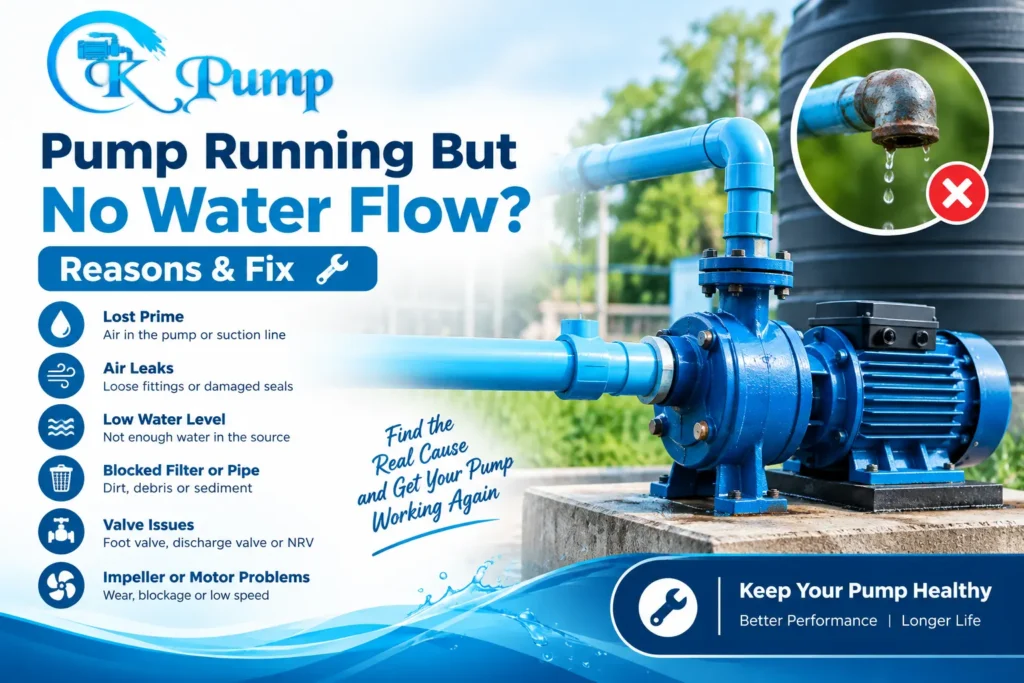
You switch on the pump. The motor starts. You hear it running normally. But the water does not come out.
It is frustrating because the pump appears to be working. However, a running motor does not always mean that the pump is moving water.
If you are facing the problem of Pump Running But No Water Flow, the cause may be related to priming, air in the suction line, a blocked pipe, low water level, a valve problem, or an internal pump issue.
The good news is that you can check several common causes before assuming that the entire pump needs replacement.
What Does It Mean When a Pump Runs but No Water Comes Out?
A water pump needs a proper path for water to enter the pump and leave through the delivery line.
In a typical centrifugal pump system, the motor drives the impeller. The impeller transfers energy to the water and helps move it through the pumping system.
If air enters the suction side, the pump loses prime, the water source becomes too low, or the water path becomes blocked, the motor can continue running without producing useful water flow.
Pump manufacturers such as Xylem and Kirloskar identify inadequate priming, suction side air leaks, blocked lines, insufficient water supply, and other installation conditions as possible causes of no water delivery.
1. The Pump Has Lost Its Prime
Loss of prime is one of the first things to check in many surface mounted centrifugal pump installations.
Priming means filling the pump casing and, depending on the installation, the suction line with water while removing trapped air.
A standard centrifugal pump cannot simply remove all the air from an empty suction line by itself. KSB explains that conventional centrifugal pumps need initial priming before they can begin pumping when the liquid level is below the pump.
How to Fix It
Switch off the pump before working on it.
Check the pump casing and follow the manufacturer’s priming instructions. Fill the casing with the required amount of water and make sure the suction system is correctly prepared.
If the pump repeatedly loses prime, do not keep priming it again and again without finding the reason. Check the suction pipe, joints, foot valve, and other connections for air entry.
2. Air Is Entering the Suction Pipe
A suction pipe must remain properly sealed.
Even when you cannot see water leaking from a suction connection, air can enter the system and affect pumping performance.
Loose fittings, damaged seals, poor connections, or cracks in the suction line can allow air to enter.
Xylem troubleshooting guidance lists air leaks in the intake line as a possible reason for a pump that operates but fails to prime and deliver water.
How to Fix It
Inspect the complete suction line from the water source to the pump.
Check threaded joints, unions, flanges, seals, and other connection points. Repair or replace damaged components and make sure connections are properly sealed.
If the pump works normally after correcting an air leak, you have likely found the problem.
3. The Water Level Is Too Low
Sometimes the pump is not the problem at all.
If the water level in a tank, well, reservoir, or other source falls below the required intake level, the pump may not receive enough water.
A surface pump cannot produce water if there is no adequate water supply reaching its suction side.
Xylem also recommends checking the available water supply and ensuring that the suction pipe remains properly positioned in the water source.
How to Fix It
Check the water level before inspecting complicated pump components.
Make sure the suction pipe remains adequately submerged where the installation requires it. If the source has insufficient water, allow it to recover before operating the pump again.
Do not keep running a pump without an adequate water supply.
4. The Suction Pipe or Filter Is Blocked
Dirt, sand, leaves, mud, or other debris can restrict the water entering the pump.
A blocked suction line can make the motor appear normal while the hydraulic side of the system struggles to deliver water.
Crompton also identifies clogged suction filters and suction related restrictions among possible causes of poor water output.
How to Fix It
Switch off the power and inspect the suction pipe, strainer, filter, and intake area.
Remove visible debris and clean the components according to the pump manufacturer’s instructions.
If the water source contains significant sediment, regular inspection becomes even more important.
5. The Foot Valve Is Blocked or Faulty
Many suction lift installations use a foot valve at the lower end of the suction pipe.
The valve helps maintain water in the suction system and prevents unwanted backflow.
If the foot valve becomes blocked, damaged, or unable to hold water properly, the pump can have difficulty maintaining prime.
A faulty valve may also allow the suction line to empty when the pump stops.
How to Fix It
Inspect the foot valve for blockage and physical damage.
Clean it if debris is preventing proper operation. Replace it if the valve does not seal correctly or has suffered damage.
The correct valve arrangement depends on the pump and installation, so always follow the manufacturer’s instructions.
6. The Discharge Valve or NRV Is Closed
The suction side is not the only place where problems can occur.
A closed or blocked discharge valve can prevent water from leaving the pump.
A non return valve can also become blocked or stuck.
Grundfos specifically lists a closed or blocked discharge valve and a blocked non return valve among the causes of a drainage pump running without delivering water.
How to Fix It
Check whether the relevant discharge valve is open and correctly positioned.
Inspect the non return valve if the system uses one.
Do not force a valve that appears stuck. Inspect it safely and repair or replace it when necessary.
7. The Impeller Is Blocked or Damaged
The impeller plays a central role in moving water through a centrifugal pump.
Debris can restrict the impeller. Wear or damage can also reduce pump performance.
If the motor runs but the impeller cannot transfer sufficient energy to the water, the result can be very low flow or no useful discharge.
Crompton notes that obstructions and component wear can contribute to reduced flow in centrifugal pumps.
How to Fix It
Turn off and isolate the pump before inspecting internal components.
If the pump requires dismantling, follow the manufacturer’s service instructions or contact a qualified technician.
Do not open the pump while it is connected to power.
8. The Motor Is Not Reaching the Correct Speed
A motor may run without delivering its expected pump performance.
Electrical problems, incorrect connections, voltage issues, or other motor related conditions can affect operating speed.
Kirloskar troubleshooting documentation includes low speed and electrical supply conditions among possible reasons for no or inadequate liquid delivery.
How to Fix It
If the pump sounds different from normal or performance has suddenly dropped, have the electrical supply and motor checked.
Electrical inspection should be carried out by a suitably qualified person, especially when the pump is hardwired.
Do not assume that a motor is healthy simply because it turns on.
9. The Pump Is Running Dry
Running a pump without sufficient water can cause damage.
A pump needs the conditions specified for its particular design. Priming and lubrication requirements also vary between pump types.
Crompton explains that dry operation can cause overheating and damage to components such as the impeller and seal.
If there is no water flow, avoid repeatedly switching the pump on just to see whether it suddenly starts working.
First identify the cause.
A Simple Troubleshooting Order
If your pump is running but no water is coming out, check the system in a logical order.
First, switch off the pump if it appears to be running without water.
Then check the following:
- Confirm that sufficient water is available at the source.
- Check whether the pump requires priming.
- Inspect the suction pipe for air leaks.
- Check the suction filter, strainer, and foot valve.
- Check the discharge valve and non return valve.
- Inspect the system for blocked pipes or fittings.
- Consider possible impeller problems.
- If the issue continues, arrange professional inspection of the pump and motor.
This approach helps you start with simple external causes before moving toward internal repairs.
When Should You Contact a Pump Professional?
Some troubleshooting checks are straightforward, but not every pump problem is suitable for DIY repair.
If the pump continues to run without delivering water after the basic checks, professional inspection can help identify internal mechanical or electrical problems.
You should also seek professional assistance when you notice unusual vibration, excessive heating, burning smells, abnormal noise, repeated electrical trips, or visible damage.
Most importantly, do not continue operating a pump when you suspect dry running or serious mechanical damage.
How Can You Prevent No Flow Problems?
Good installation and routine maintenance can reduce many common pumping problems.
Keep suction and discharge lines clean. Check valves and connections periodically. Maintain the required water level and follow the correct priming procedure for your pump.
It is also important to select a pump according to the actual water source, required flow, delivery conditions, and installation requirements.
A pump that is correctly selected and correctly installed has a much better chance of delivering consistent performance.
Final Thoughts
When you have a Pump Running But No Water Flow problem, do not immediately assume that the motor has failed.
The cause may be much simpler.
Loss of prime, air entering the suction line, low water level, blocked intake, faulty foot valve, closed discharge valve, blocked non return valve, impeller problems, or motor performance issues can all affect water delivery.
Start with the basic checks and work through the system step by step.
If you are unsure about the pump condition or electrical system, get professional help instead of repeatedly running the pump and hoping for the best.
For reliable water pumping solutions and guidance on choosing the right pump for your application, you can explore CK Pump and its range of water pumping products at CK Pump.