
Raw Materials Used in High Quality Water Pumps (Complete Manufacturing Insight)
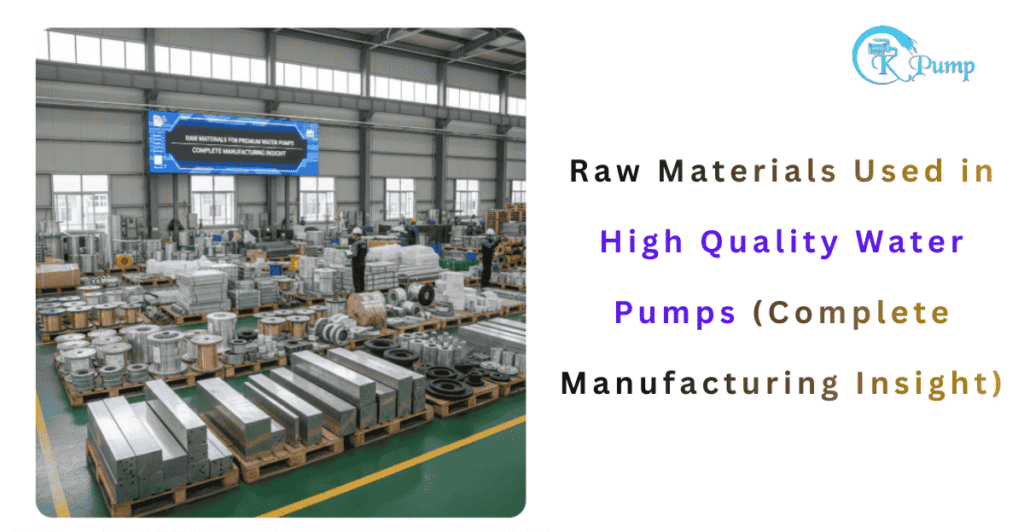
When people compare water pumps, they usually talk about flow rate, power consumption, or price. But very few buyers look at the most important factor that decides a pump’s lifespan and performance — the raw materials used in manufacturing.
If you want a pump that runs smoothly for years, handles pressure without failure, and performs consistently in Indian working conditions, understanding the raw materials used in high quality water pumps becomes essential.
This guide breaks it down clearly — no technical overload, just practical clarity.
Why Raw Material Quality Matters in Water Pumps
A water pump is not a single unit; it’s a combination of mechanical, electrical, and hydraulic components. Each part faces different stresses:
Constant water contact
High rotational speed
Electrical heat
Pressure variations
Mineral-heavy water conditions
Low-grade raw materials may reduce upfront cost, but they cause:
Early corrosion
Shaft bending
Motor overheating
Seal leakage
Drop in efficiency
That’s why every quality water pump manufacturer focuses heavily on raw material selection before design or assembly even begins.
1. Cast Iron – Strength & Stability for Pump Bodies
Where it’s used:
Pump casing
Base plates
Volute chambers
Why cast iron matters:
High-grade cast iron (FG 200 / FG 260) provides:
Structural strength
Vibration control
Resistance to mechanical shock
In agricultural and industrial pumps, the casing faces continuous pressure. Inferior iron cracks under stress, while premium-grade cast iron maintains shape and alignment.
Quality manufacturers also apply anti-corrosive coatings to extend service life in humid or water-heavy environments.
2. Stainless Steel – Corrosion Resistance Where It Counts
Where it’s used:
Pump shafts
Fasteners
Select impeller designs
Submersible pump components
Common grades:
SS 304
SS 316 (for higher corrosion resistance)
Stainless steel is critical for parts that remain constantly in contact with water. It prevents:
Rust formation
Surface pitting
Performance loss due to scaling
For submersible and borewell pumps, stainless steel ensures reliability even in mineral-rich or slightly acidic water.
3. Copper – The Heart of Motor Performance
Where it’s used:
Why copper quality is non-negotiable:
High-purity electrolytic copper offers:
Better electrical conductivity
Lower heat generation
Higher motor efficiency
Reduced power consumption
Low-quality copper or aluminum windings increase heat, shorten motor life, and raise electricity bills.
A quality water pump manufacturer never compromises on copper grade because motor efficiency directly affects customer trust.
4. Silicon Steel Laminations – Motor Efficiency Backbone
Where it’s used:
Motor stator and rotor cores
Benefits of high-grade silicon steel:
Reduced magnetic losses
Lower noise and vibration
Improved power factor
Consistent torque output
Precision-cut laminations ensure minimal energy loss during motor operation. Poor-quality laminations lead to overheating and unstable performance.
5. Engineering Plastics – Lightweight & Durable Components
Where it’s used:
Diffusers
Fan covers
Terminal boxes
Select impellers (domestic pumps)
High-quality engineering plastics like:
Polypropylene (PP)
Glass-filled nylon
These materials offer:
Corrosion resistance
Lightweight construction
Electrical insulation
Long-term durability
In domestic water pumps, plastic components reduce weight without compromising strength.
6. Bronze & Brass – Precision Parts with Longevity
Where it’s used:
Bushes
Bearings
Valves
Mechanical seal parts
Bronze and brass are chosen because they:
Reduce friction
Handle wear better than iron
Resist corrosion in wet environments
These materials ensure smooth rotation and reduce internal wear, especially in continuous-duty pumps.
7. Carbon, Ceramic & Rubber – Sealing and Protection Materials
Where they’re used:
Mechanical seals
O-rings
Gaskets
A high-quality mechanical seal usually combines:
Carbon face
Ceramic seat
Nitrile or EPDM rubber
This combination prevents leakage even under pressure and temperature changes. Cheap seals are one of the biggest reasons pumps fail prematurely.
8. Insulation Materials – Electrical Safety & Longevity
Where they’re used:
Motor insulation
Coil wrapping
Terminal protection
High-grade insulation materials provide:
Thermal resistance
Moisture protection
Electrical safety
Class B, F, or H insulation standards are commonly followed by reputed manufacturers to ensure longer motor life.
How Raw Materials Define a Quality Water Pump Manufacturer
Any company can assemble a pump. What separates a quality water pump manufacturer is:
Controlled sourcing of raw materials
Material testing before production
Adherence to IS and ISO standards
Consistent material grading across batches
Zero compromise on motor copper and steel quality
When manufacturers invest in raw materials, the customer benefits through:
Lower maintenance costs
Higher efficiency
Longer pump life
Stable performance in real-world conditions
Real-World Impact: What Buyers Actually Experience
High-quality raw materials result in:
Smooth pump operation
Reduced vibration and noise
Better water flow consistency
Lower electricity consumption
Fewer breakdowns during peak usage
This is why pumps built with premium materials perform reliably in agriculture, residential, and industrial applications.
Final Thoughts
Understanding the raw materials used in high quality water pumps helps buyers make informed decisions instead of choosing based on price alone.
A well-built pump is not about looks or claims — it’s about what’s inside:
Strong metals
Pure copper
Reliable seals
Efficient motor components
When these materials come together under proper engineering and quality control, the result is a pump that works hard, lasts long, and delivers consistent performance.
That’s exactly what defines a true quality water pump manufacturer.